
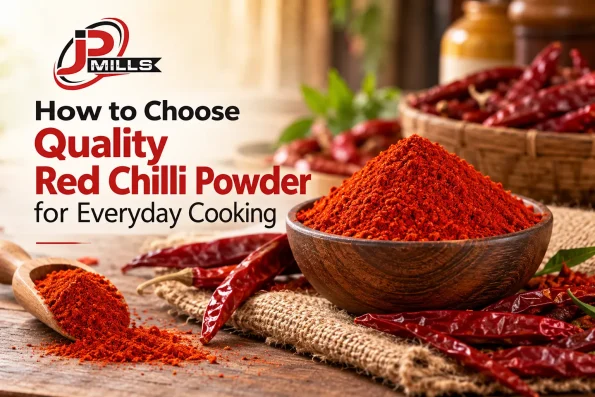
Red chilli powder goes into almost everything on an Indian stove, from the tadka for a simple dal to a Sunday mutton gravy. Because it goes into so many dishes, the powder you buy shapes the flavour of the whole week’s meals.
If you are wondering how to choose red chilli powder, the short answer is this. Look at the colour, smell the aroma, match the heat to your family’s taste, read the pack carefully, and buy only as much as you will finish while it is fresh. No single check is enough on its own. Together, they tell you a lot.
Check the colour and appearance
Open a fresh pack and look at the powder. Good chilli powder usually looks even in texture, with no visible lumps, damp patches or stray bits of husk.
Colour is where many people go wrong. A deep red powder looks appealing, but colour alone cannot tell you whether a powder is good or pure. Different chilli varieties give different shades, from bright red to a deeper brick red. A brighter powder is not automatically better, and a darker one is not automatically worse.
Use colour to notice problems, such as a dull, faded look or signs of moisture. Don’t use it to decide quality.
Understand the heat level
Chilli powder pungency varies from one product to another, so “good” depends partly on what you cook.
- A mild, colourful powder suits dishes like paneer butter masala or tandoori-style marinades, where you want rich colour without much fire.
- A sharper powder suits dishes like Bengali kosha mangsho or a spicy aloo posto, where the heat is part of the character.
- Families with children or elderly members often like a balanced heat that they can adjust with a pinch more at the end.
If you are trying a new brand, buy a small pack first. Cook your usual dal or sabzi with the amount you normally use. If the dish comes out much hotter or milder than expected, you have learned something useful without wasting a kilo of masala.
Pay attention to aroma
Smell is one of the easiest checks to do at home. Fresh chilli powder smells warm, slightly fruity and pleasantly sharp, and you may sneeze a little when you open the pack.
A flat, stale or musty smell is a warning sign. It can mean the powder is old, was stored badly or has picked up moisture. A faint smell doesn’t always mean poor quality, but spices lose aroma over time. Weak aroma usually means weak flavour in the pot.
Read the packaging and ingredient information
The back of the pack tells you more than the front. Before buying packaged chilli powder, check these things:
- Ingredient list. If you want plain chilli powder, the list should be short and clear.
- Manufacturer details. A name and address mean someone is accountable for what is inside.
- FSSAI licence number. Packaged food sold in India should carry one.
- Batch information. This helps the maker trace a pack if there is ever a problem.
- Net weight and price. Compare these across brands to see what you are really paying.
Packaging also matters for freshness. Choose a pack that is properly sealed and undamaged, because torn or loose packs let in air and moisture. Avoid packs that look old, dusty or squeezed.
Check dates and storage instructions
Look for the manufacturing or packing date and the best-before date. A recently packed powder will generally smell and taste better than one that has sat on a shelf for months.
At home, how you store chilli powder properly matters as much as what you buy:
- Transfer it to a clean, dry, airtight container once the pack is opened.
- Keep it in a cool, dry place, away from the stove, sunlight and steam.
- Always use a dry spoon. A single wet spoon can spoil the whole jar.
Many kitchens keep the masala box right beside the gas stove, where heat and steam slowly dull the spices. A shelf or cupboard a little away from the stove keeps them in better shape.
Choose the right pack size
Pack size sounds like a minor detail, but it affects freshness. Ground spices are best used within a reasonable time, so buying more than you need can mean the last portion tastes tired.
- A small household that cooks a few times a week will usually get through a small pack comfortably.
- A larger family that cooks daily can go for a bigger pack and still finish it while fresh.
- If you are trying a new brand, start with the smallest pack available.
If you buy in bulk to save money, keep part of it sealed and open it only when the first batch runs low.
Common mistakes to avoid
- Judging by colour alone. As covered above, a rich shade is not proof of quality.
- Ignoring the label. The ingredient list, dates and licence details take only seconds to read.
- Buying too much at once. A large stock of an unfamiliar brand is risky, and a big pack you can’t finish loses aroma.
- Storing it badly. Even good powder suffers in a damp jar or a hot corner.
- Using only price as the guide. The cheapest pack isn’t always the best value, and the most expensive one isn’t always better.
Putting it all together
Choosing red chilli powder for everyday cooking comes down to a few habits. Check that the colour looks natural and the texture is dry. Smell it. Match the heat to your cooking. Read the label. Check the dates and buy a sensible quantity.
If you would like to try a locally made option, you can look at J.P. Mills Red Chilli Powder. According to the brand, it is made from carefully selected red chillies, finely ground, hygienically packed and FSSAI licensed. Small and larger pack options make it easy to start with a little and see how it suits your kitchen.
When buying packaged red chilli powder, it is worth taking a moment to read the label carefully. Check the ingredient list, manufacturer details, batch information, and best-before date before making your choice. For more information about food safety and packaged food labelling in India, you can refer to the official Food Safety and Standards Authority of India (FSSAI) website, which provides guidance and resources to help consumers make informed food choices.
6. FAQ
How can I choose good-quality red chilli powder?
Check the colour and texture, smell it for a fresh aroma, and read the ingredient list and dates on the pack. Pick a heat level that suits your dishes, and buy a quantity you can finish while it is fresh.
Does the colour of chilli powder determine its quality?
No. Colour varies with the chilli variety, and a bright red powder isn’t automatically better than a darker one. Use colour only to spot obvious problems like dullness or dampness, and judge the rest by aroma, label and how it cooks.
How should red chilli powder be stored?
Keep it in a clean, dry, airtight container in a cool place away from the stove and sunlight. Always use a dry spoon, because moisture spoils the powder quickly.
What should I check before buying packaged chilli powder?
Check the ingredient list, manufacturer details, FSSAI licence number, batch information, manufacturing or packing date and best-before date. Also make sure the pack is sealed and undamaged.